The thirty, sixty, or ninety day filter change guidance printed on the side of most HVAC filter packages is a starting point, not an answer. It describes a range that applies to an average home under average conditions, and Denver homes are not average. The combination of wildfire smoke seasons, high-altitude dust, dry climate, active households with pets, and the construction activity that accompanies Colorado’s ongoing growth creates filter loading conditions that make the generic packaging guidance inadequate for many Denver homeowners. Following a filter change schedule that does not reflect the actual conditions of your home produces either unnecessarily frequent changes that waste money or infrequent changes that restrict airflow, reduce system efficiency, and shorten equipment life. Aspire Building Services helps Denver homeowners understand the specific factors that determine the right filter change frequency for their homes, and this guide provides the practical framework for making that determination.
Why Generic Filter Change Guidance Does Not Fit Denver Homes
The filter change intervals printed on packaging are developed for a hypothetical average home, and the conditions that determine actual filter loading in Denver diverge from that average in specific ways that either shorten or extend the appropriate interval.
Denver’s dry climate produces more airborne dust than humid markets because dry air holds more suspended particles and because the lack of precipitation means that dust is not regularly washed from surfaces and vegetation. A home in Denver accumulates airborne particulate at a higher rate than a comparable home in a humid market, which means the filter is accumulating loading faster than the packaging interval assumes.
Wildfire smoke events that have become a recurring feature of Colorado summers introduce high concentrations of fine particles into outdoor air that finds its way into homes through infiltration and ventilation pathways. A filter that would last sixty days under normal conditions may reach its loading capacity in two to three weeks during a significant smoke event because the concentration of fine particles in the air being filtered is dramatically higher than normal. The generic packaging guidance has no way to account for events that vary from year to year and region to region.
Denver’s altitude affects HVAC system airflow in ways that influence filter loading rates. The reduced air density at Denver’s elevation means the system moves more air volume per unit of time than it would at sea level to deliver the same thermal energy, which passes more air through the filter per hour and loads it more quickly than the packaging assumes.
Construction activity in and around Denver homes, whether from remodeling work in the home itself or from nearby construction that generates dust and debris, creates temporary periods of elevated particulate loading that can shorten filter life dramatically. A filter installed before a bathroom remodel begins may be heavily loaded with drywall dust within a week regardless of what the packaging suggests. Indoor air quality solutions from Aspire Building Services address the full range of Denver indoor air quality factors including the filter management strategies that match actual home conditions.
The Factors That Determine Your Specific Filter Change Interval
Rather than applying a generic interval, Denver homeowners benefit from evaluating the specific factors in their homes that affect how quickly filters load and calibrating their change schedule accordingly.
Pet ownership is the single factor that most consistently shortens filter life in Denver homes. Pet dander and hair are captured by HVAC filters continuously as air circulates through the system, and a home with multiple pets may need filter changes every three to four weeks during periods of active shedding. A home with one medium-sized pet in a moderately sized house typically benefits from a thirty to forty-five day change interval rather than the sixty to ninety day interval that non-pet households might use. The filter change interval for pet households should also account for shedding seasons, when hair and dander generation is higher than at other times of year.
Household size and activity level affect filter loading through the direct contribution of human occupancy to airborne particulate. Cooking generates grease particles and combustion byproducts that load filters, cleaning activities stir up settled dust that enters the return air stream, and the general activity of a large household generates more airborne particulate than a small one. A family of five in an active household loads filters faster than a single occupant in the same home.
Indoor renovation and construction activity is a temporary factor that requires a specific response rather than a permanent schedule adjustment. During active renovation that generates dust, drywall compound particles, or other construction debris, filters should be checked weekly and changed as needed regardless of the normal interval. A filter check during renovation is a thirty-second task that prevents the system from distributing construction debris throughout the home and protects the HVAC equipment from the high particulate loading that renovation generates.
Allergy or respiratory conditions in the household make filter performance more important and more consequential than in households without these health considerations. Homeowners with household members who have asthma, severe allergies, or other respiratory conditions benefit from more frequent filter changes that maintain higher filtration efficiency throughout the filter’s life rather than allowing performance to degrade as the filter loads. A partially loaded filter still captures particles, but a fresh filter captures them more efficiently, which matters more for households where air quality has direct health implications.
System runtime is a factor that varies seasonally in Denver and affects filter loading rate directly. A system that runs twelve hours per day during peak summer or winter conditioning demand loads its filter faster than the same system running four hours per day during mild shoulder season weather. Adjusting filter change intervals seasonally to account for higher runtime during peak demand periods is a practical approach that matches change frequency to actual loading conditions.
Reading Your Filter to Calibrate Your Schedule
The most reliable way to determine the right filter change interval for a specific Denver home is to check the filter at regular intervals and observe how quickly it is loading rather than relying on a fixed schedule.
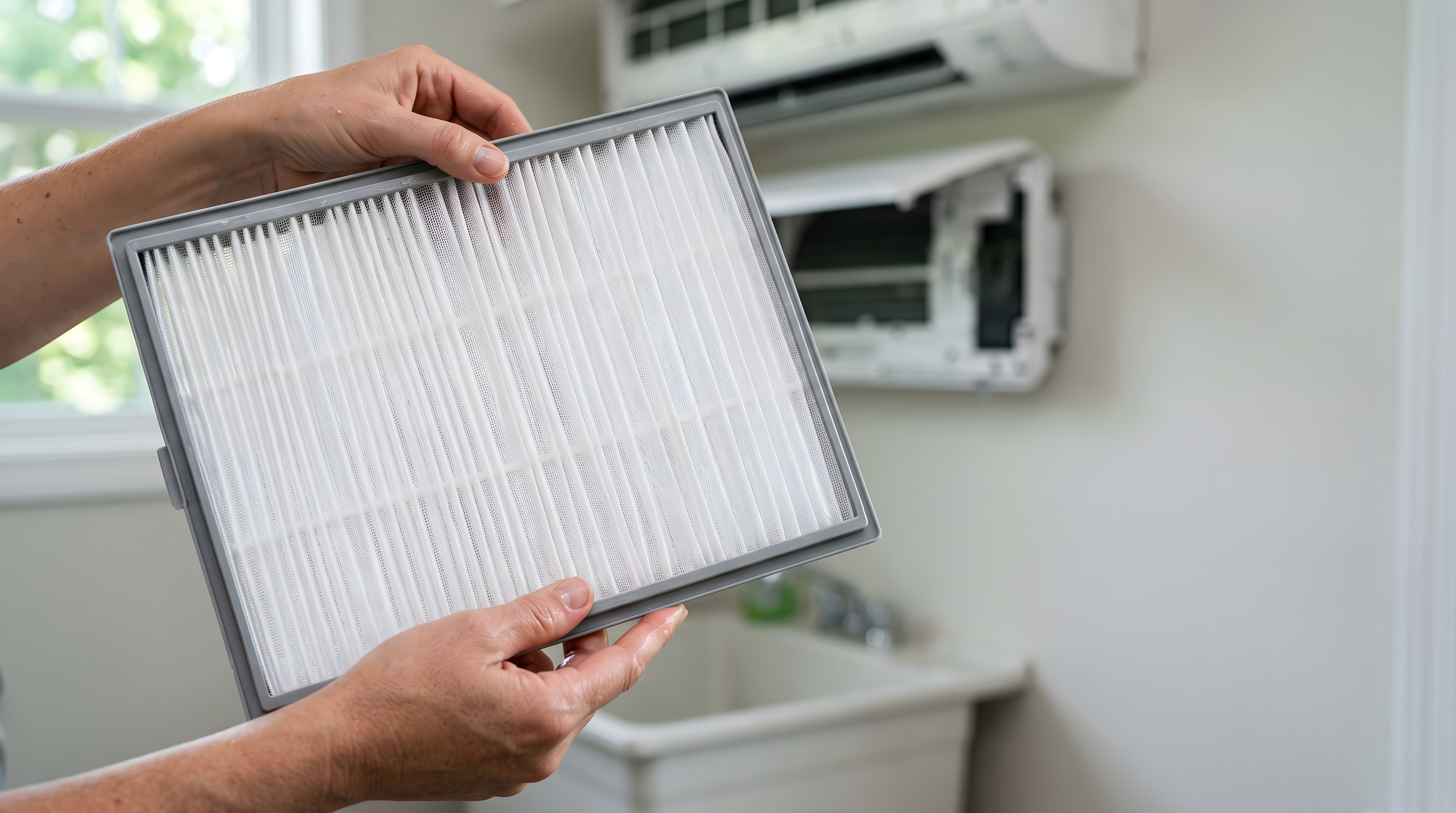
A visual inspection of the filter every two to three weeks during the first months of a new filter change schedule provides the data needed to calibrate the interval for actual home conditions. A filter that appears heavily loaded with gray or brown particulate accumulation after three weeks needs to be changed at that interval. A filter that still appears relatively clean after six weeks can be left in place until the next scheduled check.
The color and texture of the accumulated material on the filter provides information about the specific sources of particulate in the home. Gray, uniform accumulation is typically household dust and skin particles. Brown or tan accumulation with a gritty texture suggests outdoor soil and dust infiltration. Dark gray or black accumulation, particularly in concentrated patterns at the edges of the filter, suggests combustion particles from cooking, candles, or during wildfire smoke events, outdoor smoke infiltration. Pet hair visible on the filter face confirms that the pet contribution to filter loading is significant.
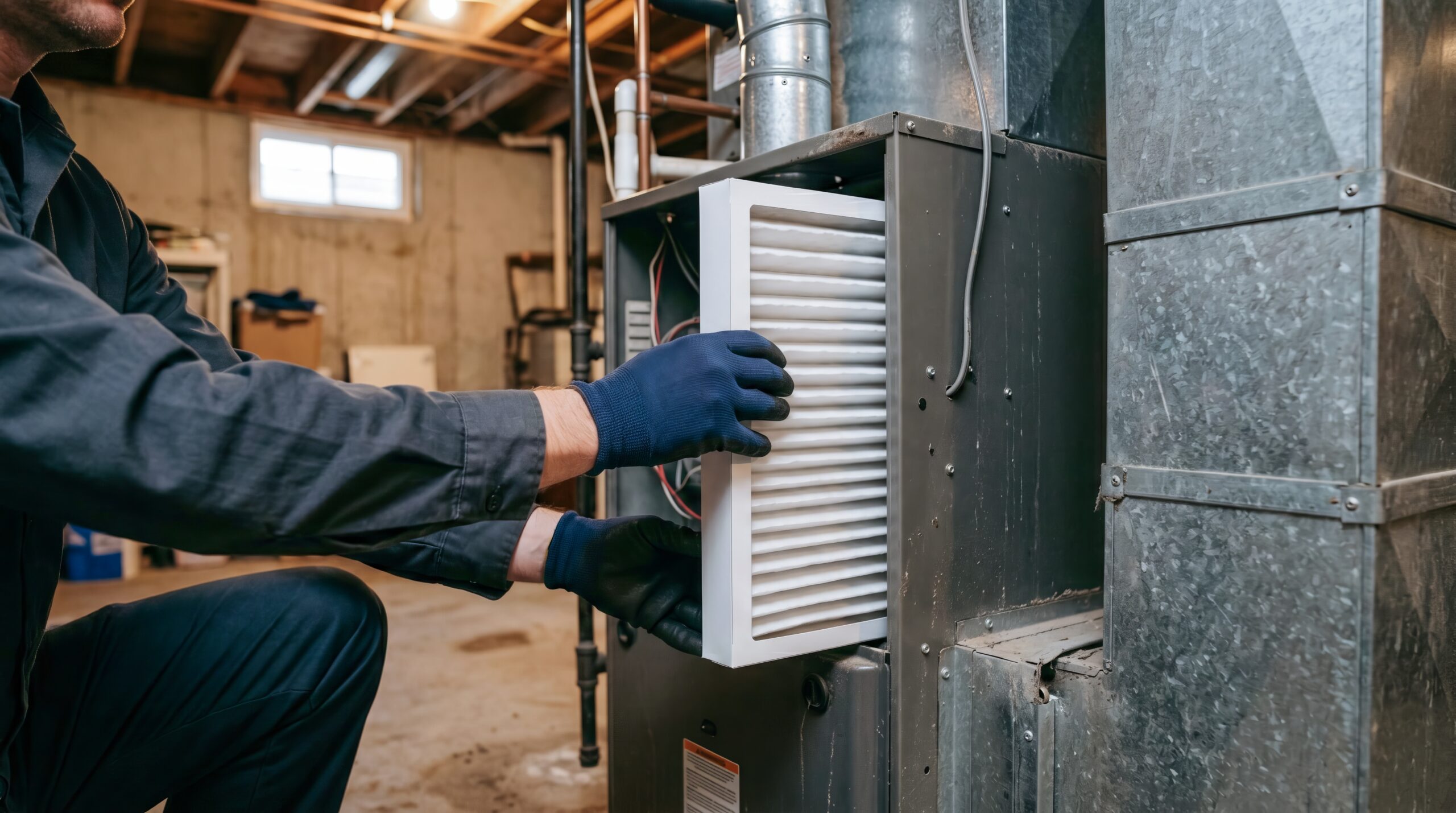
A filter that is loading unevenly, with heavy accumulation in some areas and light accumulation in others, may indicate airflow distribution problems in the duct system or a filter that is not properly sealed in its housing. A filter that rocks or moves in its housing allows air to bypass the filter entirely through gaps at the edges, which means the system is not receiving the filtration it appears to have even when the filter looks relatively clean. Confirming that the filter is properly seated and sealed in its housing is a basic check that is worth performing at each change.
Seasonal Adjustments for Denver’s Specific Conditions
Denver’s climate creates predictable seasonal periods where filter change intervals should be adjusted from the baseline that applies during normal operating conditions.
Wildfire smoke season, which in Colorado typically runs from late June through September, is the period when filter change intervals should be shortened most significantly from normal. During active smoke events when outdoor air quality is in the unhealthy range, checking the filter weekly and changing it when it shows significant loading regardless of how recently it was changed is the appropriate approach. After a major smoke event clears, checking the filter before resuming normal operation confirms whether the event loaded the filter enough to warrant an immediate change.
Spring in Denver brings cottonwood season, when cottonwood trees release the airborne seed fluff that is visible floating through the air in late May and June. Cottonwood is captured by HVAC filters and can load them quickly during peak release periods. Denver homeowners with cottonwood trees nearby should check filters more frequently during the peak cottonwood period and change them as needed.
Fall HVAC system startup for the heating season is an appropriate time for a filter change regardless of when the last change occurred. A fresh filter at the start of heating season ensures that the system begins the heating season with full airflow capacity and that the heating season filter change schedule starts from a known baseline. Heating services from Aspire Building Services include filter inspection and replacement as part of fall heating system startup and maintenance visits.
Peak winter operation, when the furnace runs for extended periods during cold Denver weather, loads filters more quickly than moderate shoulder season operation. A filter change interval that works during mild fall weather may need to be shortened during the extended cold periods of January and February when system runtime is highest.
Filter Quality and Its Relationship to Change Frequency
The MERV rating of the filter affects both its air quality performance and how quickly it loads under Denver’s conditions, and the relationship between filter quality and change frequency is worth understanding before selecting filter products.
Higher MERV rated filters capture smaller particles more effectively, which is beneficial for air quality but also means they accumulate loading more quickly because they are capturing particles that lower-rated filters pass through. A MERV 13 filter in a Denver home with pets and wildfire smoke exposure may need to be changed every three to four weeks during peak loading periods, whereas the same home with a MERV 8 filter might go six weeks between changes. The air quality benefit of the higher-rated filter may justify the more frequent change interval, but the homeowner should go in with accurate expectations about the interval rather than expecting a high-MERV filter to last as long as a lower-rated one.
Filter thickness also affects both capacity and change interval. A four-inch deep media filter has significantly more surface area and media volume than a one-inch filter of the same face dimensions, which means it accumulates loading more slowly and can go longer between changes while maintaining equivalent or better filtration efficiency. For Denver homeowners who want to reduce the frequency of filter changes while maintaining or improving filtration quality, upgrading to a four-inch media filter with an appropriate housing is a one-time investment that produces ongoing benefits.
The economics of filter selection deserve consideration alongside the air quality performance. A high-quality MERV 13 filter changed every four weeks costs more annually than a MERV 8 filter changed every six weeks, but the air quality difference may justify the cost for households with pets, allergy sufferers, or elevated smoke exposure. Understanding the full annual cost of a specific filter and change interval combination, rather than just the per-filter price, produces more informed purchasing decisions.
Frequently Asked Questions About HVAC Filter Changes in Denver
How do I know when my filter actually needs to be changed rather than following a fixed schedule?
Visual inspection is the most reliable indicator. A filter that is visibly gray or brown across most of its face area, that has visible pet hair accumulation, or that has dark discoloration indicating combustion particle loading should be changed regardless of when it was last replaced. A filter that still appears relatively clean with good airflow through it can remain in service until the next scheduled check.
Does running the fan continuously affect how often I need to change the filter?
Yes. Continuous fan operation moves more air through the filter per day than intermittent operation, which loads the filter faster. Denver homeowners who run their HVAC fan continuously for air quality reasons, such as during wildfire smoke events, should check the filter more frequently during continuous operation periods and expect shorter intervals between changes than during normal intermittent operation.
Can a dirty filter damage my HVAC system?
Yes. A severely restricted filter reduces airflow through the system, which can cause the evaporator coil to freeze in cooling mode, the heat exchanger to overheat in heating mode, and the blower motor to work harder against the increased static pressure. Extended operation with a heavily loaded filter is one of the most common causes of avoidable HVAC component failures and reduced equipment life.
What MERV rating filter should I use in my Denver home?
MERV 8 to MERV 13 is the practical range for most Denver residential systems, with the appropriate rating depending on the system’s ability to handle the increased static pressure of higher-rated filters without airflow problems. MERV 13 provides meaningful fine particle capture including wildfire smoke particles for systems that can support it. Confirming that your system can handle the selected MERV rating without airflow restriction is more important than maximizing the MERV rating.
Should I change my filter before or after a wildfire smoke event?
Both. Installing a fresh filter before a forecast smoke event gives the filter full capacity for the smoke particles it will capture during the event. Checking the filter after the event clears and changing it if it has accumulated significant smoke loading ensures the system starts the post-smoke period with full filtration capacity rather than a heavily loaded filter from the event.
How do I get a professional assessment of my Denver home’s filtration needs?
Contact Aspire Building Services to discuss your home’s specific filtration requirements. A professional assessment of your system’s airflow capacity, your home’s particulate sources, and Denver’s seasonal conditions produces filter recommendations that are matched to your actual situation rather than generic packaging guidance.
Match Your Filter Schedule to Your Home, Not the Package
The Denver home that changes filters every thirty days because that is what the package says and the Denver home that changes filters every ninety days for the same reason are both following guidance that was not developed for their specific conditions. The right answer is somewhere in between for most Denver homes, and it varies by season, by household, by system, and by the specific air quality events that affect Denver’s outdoor air from year to year. A change schedule calibrated to actual filter loading through regular visual inspection, adjusted for Denver’s seasonal conditions, and matched to the air quality performance the household needs is the approach that keeps systems running efficiently and indoor air quality at its best. About Aspire Building Services provides the background on the team and expertise that Denver homeowners can rely on for HVAC guidance that reflects Colorado’s specific conditions. Contact Aspire Building Services to discuss a filter management approach that fits your Denver home.