The first cold night of a Denver fall has a way of arriving faster than anyone expects. Temperatures that were comfortable for weeks drop overnight into the forties, the thermostat gets switched from cool to heat for the first time since spring, and then nothing happens. No ignition, no airflow, no warmth. For Denver homeowners who discover their furnace will not start after months of sitting idle, the combination of an unfamiliar problem and dropping indoor temperatures creates an urgency that is understandable but that sometimes leads to unnecessary service calls for issues a homeowner can safely resolve without professional help. This guide covers the checks that are safe to perform before calling for service, the signs that indicate a problem that requires professional diagnosis, and the situations where the furnace should stay off until a technician arrives. Aspire Building Services helps Denver homeowners navigate heating season startup with the confidence of knowing what to check and when to call.
Why Furnaces Fail to Start After Summer Inactivity
A furnace that sat unused through a Denver summer is a furnace that has been exposed to months of thermal cycling, humidity variation, and in some cases pest activity that can affect startup in ways that have nothing to do with the furnace’s underlying mechanical condition.
Dust accumulation is the most common and most benign cause of furnace startup issues after summer inactivity. Dust that settles on the flame sensor, the igniter, and other components during months of non-use can interfere with the ignition sequence in ways that prevent the furnace from completing its startup cycle. The flame sensor, which is designed to confirm that ignition has occurred before opening the gas valve fully, can develop an insulating layer of dust or oxidation that prevents it from reading the flame correctly even when ignition is occurring normally.
Pilot light or igniter issues are common first-startup problems for furnaces that have not run in months. Standing pilot light systems that were manually lit before the heating season can have pilots that went out during the summer and need to be relit. Electronic ignition systems can have igniters that are at the end of their service life and that may have functioned marginally through the previous heating season but fail to produce the glow temperature needed for ignition after summer inactivity.
Condensation that formed inside the furnace cabinet or flue system during summer humidity periods can affect startup components and in some cases can cause issues with pressure switches and draft inducer operation that prevent the furnace from completing its startup sequence. Denver’s dry climate limits this issue compared to more humid markets, but homes with high indoor humidity from cooking, bathing, and occupancy can still develop condensation issues in furnace components during summer months.
Pest activity during summer months can create startup problems that range from nuisance to serious. Spiders, wasps, and rodents sometimes find their way into furnace cabinets and flue systems during the months the furnace is not operating, and the presence of debris, nests, or damage from these sources can block pressure switch ports, obstruct flue passages, or damage wiring in ways that prevent startup. Heating services from Aspire Building Services cover the full range of furnace startup issues including the post-summer inspection and cleaning that addresses these common causes before they become emergency calls.
Safe Checks to Perform Before Calling for Service
Several furnace startup issues can be safely identified and in some cases resolved by a homeowner with basic familiarity with their system. These checks are appropriate before scheduling service and may resolve the problem without a service call.
Check the thermostat first. Confirm that the thermostat is set to heat mode rather than cool or off, that the temperature setpoint is above the current indoor temperature, and that the batteries in a battery-powered thermostat are fresh. A thermostat with dead batteries or one that was left in cool mode from the summer will not call for heat regardless of the furnace’s condition. This sounds obvious but accounts for a meaningful percentage of no-heat calls in early fall.
Check the power switch and circuit breaker. Most furnaces have a power switch on or near the unit that resembles a light switch and is sometimes accidentally turned off during summer cleaning or maintenance. Confirm this switch is in the on position. Check the electrical panel for a tripped breaker on the furnace circuit and reset it if tripped. If the breaker trips again immediately after reset, do not reset it a second time and proceed to calling for service.
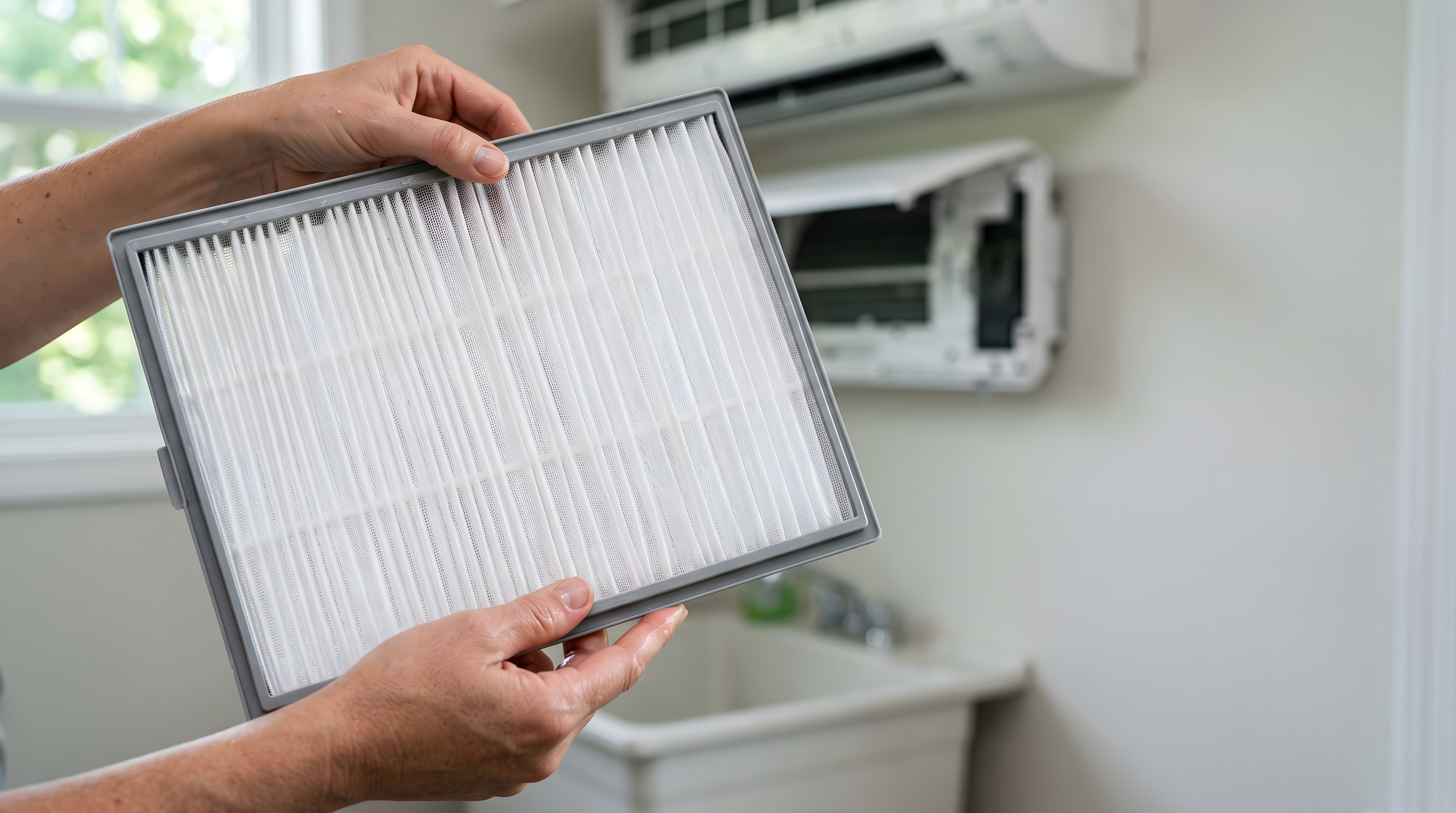
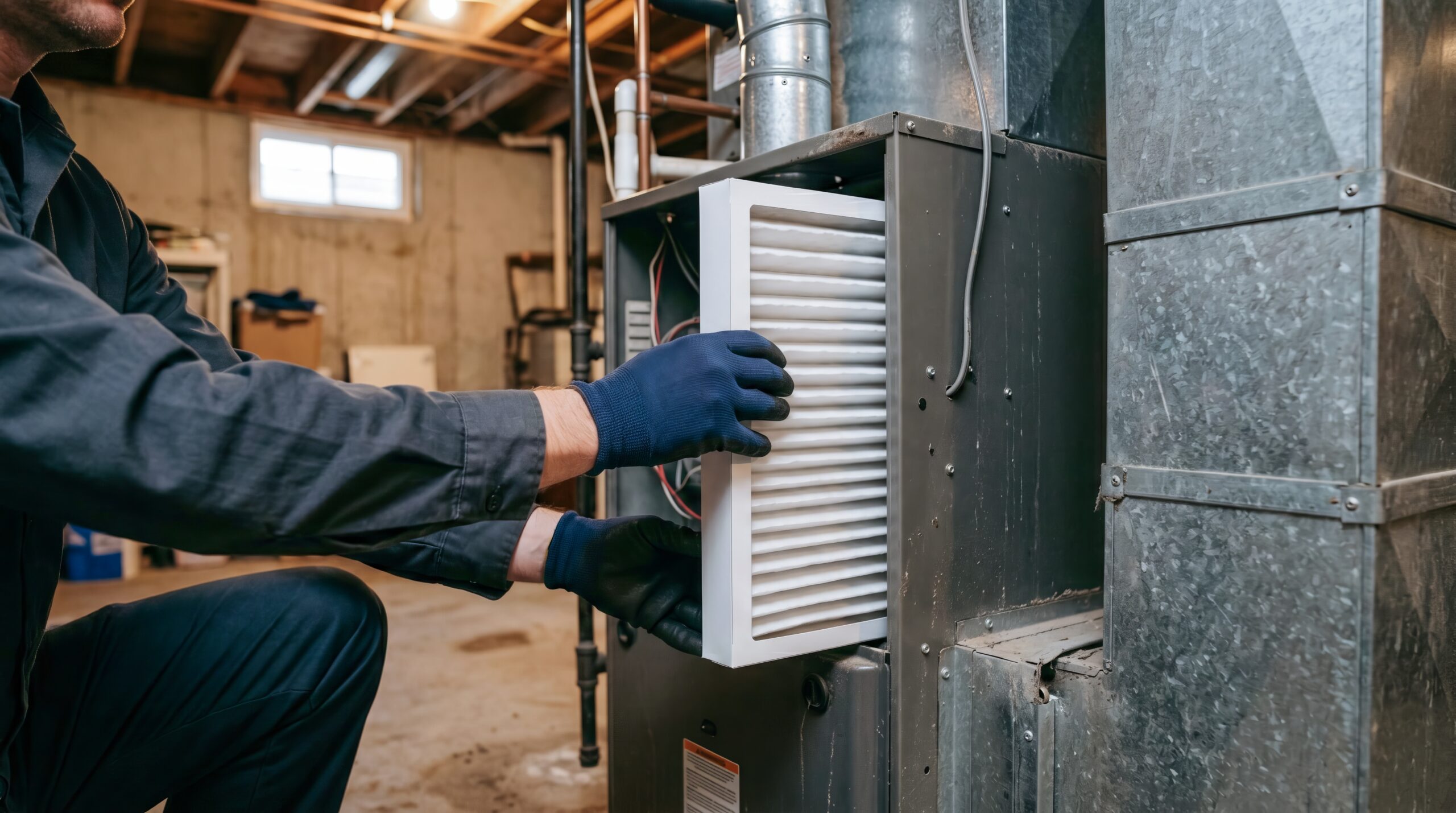
Check the filter. A severely clogged filter can prevent the furnace from starting by restricting airflow to the point where safety limits prevent operation. If the filter has not been changed since last heating season it should be replaced before attempting to start the furnace. How often to change HVAC filters in Denver addresses the filter replacement schedule that keeps Denver systems operating without the airflow restrictions that can prevent startup.
Check the furnace drain line if your furnace is a high-efficiency condensing model with a white PVC flue pipe rather than a metal flue. High-efficiency furnaces produce condensate that drains through a line that can become clogged during summer inactivity. A blocked drain triggers a float switch that prevents the furnace from operating. Inspecting the drain line for blockage and clearing any debris is a safe homeowner check for this issue.
Check the gas supply. Confirm that the gas shutoff valve on the supply line to the furnace is in the open position. This valve is sometimes closed during summer service work and not reopened, or may have been closed for other reasons. The valve handle should be parallel to the gas line when open and perpendicular when closed.
Check for error codes. Most modern furnaces have a diagnostic LED that flashes error codes when the startup sequence fails. The furnace door panel or the manufacturer documentation typically includes a code reference that identifies what the flashing pattern means. Reading the error code before calling for service gives the technician specific diagnostic information that can shorten the service call and in some cases allows the homeowner to identify a simple issue that can be resolved without professional help.
When to Stop Checking and Call a Professional
The safety-first principle for furnace troubleshooting is straightforward: stop self-troubleshooting and call a professional when the issue involves gas, electrical problems beyond a single breaker reset, or any situation where you smell gas or suspect a combustion problem.
If you smell gas at any point during your inspection, do not attempt to start the furnace, do not operate any electrical switches in the home, leave the home, and call your gas utility’s emergency line from outside. A gas smell near the furnace indicates a leak that requires immediate professional attention and is not a situation for further investigation by anyone other than a qualified technician.
If the furnace starts but produces an unusual smell other than the normal dust burn-off odor that accompanies first startup of the season, turn the system off and call for service. Burning plastic, electrical burning smell, or a persistent sulfur or rotten egg smell after the system has been running for more than a few minutes all indicate problems that require professional diagnosis.
If the furnace starts briefly and then shuts off repeatedly, this lockout pattern indicates that the system is detecting a fault condition and shutting down as a safety measure. Repeatedly resetting a furnace that is locking out does not fix the underlying problem and in some cases can mask safety issues that need professional diagnosis. One reset attempt after a lockout is reasonable. Multiple resets of a repeatedly locking out furnace is not.
If the error code displayed by the furnace’s diagnostic LED indicates a pressure switch fault, a limit switch fault, or a flame sensor fault, these are diagnostic starting points for a technician rather than homeowner repair items. Pressure switch and limit switch faults can indicate blocked flue passages, heat exchanger issues, or airflow problems that require professional assessment. Indoor air quality solutions and combustion safety are related concerns that a professional furnace inspection addresses as part of the startup diagnostic process.
The Heat Exchanger Warning
The heat exchanger is the component of a gas furnace that deserves specific mention in any fall startup guide because it represents the intersection of furnace performance and carbon monoxide safety that homeowners most need to understand.
The heat exchanger is a metal chamber that separates the combustion gases produced by the burner from the air that is circulated through your home. When functioning correctly, combustion gases including carbon monoxide go up the flue and out of the home while filtered household air passes around the outside of the heat exchanger, picks up heat, and is delivered to the living space. A cracked or compromised heat exchanger allows combustion gases to mix with the circulating air, which can introduce carbon monoxide into the living space.
Heat exchanger damage is not visible to a homeowner inspection and requires professional assessment. The risk factors for heat exchanger damage include furnaces that are fifteen years or older, systems that have experienced repeated overheating from restricted airflow, and systems that have visible rust or deterioration in the burner compartment. Any furnace with these risk factors should have a professional heat exchanger inspection before the heating season rather than after a carbon monoxide incident reveals the problem.
Confirming that carbon monoxide detectors in the home are functional and appropriately placed before the heating season begins is a basic safety step that every Denver homeowner should take alongside furnace startup. Carbon monoxide detectors should be located on each level of the home and near sleeping areas.
Frequently Asked Questions About Furnace Startup After Summer in Denver
How long should it take for a furnace to start after switching from cool to heat for the first time?
Most modern gas furnaces complete their startup sequence within thirty to ninety seconds of receiving a heat call from the thermostat. The sequence includes draft inducer startup, igniter warm-up, ignition, and flame verification before the blower starts distributing warm air. If the furnace does not produce warm air from the registers within three to five minutes of the thermostat calling for heat, a startup problem is likely.
Is it normal for the furnace to smell like burning when it first starts in fall?
Yes. A mild burning dust smell when the furnace runs for the first time in fall is normal and typically clears within one to two hours of operation as accumulated dust burns off heating surfaces. A strong burning smell, a burning plastic or electrical smell, or any smell that persists beyond the first few hours of operation warrants turning the system off and calling for professional assessment.
Should I have my furnace inspected every fall before turning it on?
An annual furnace inspection before the heating season is a genuinely valuable investment for Denver homeowners, not a maintenance upsell. A professional inspection confirms heat exchanger integrity, burner condition, ignition system function, safety control operation, and flue condition before the system runs under heating season demand. Issues discovered during an inspection are almost always less expensive to address than the same issues discovered during a breakdown on a cold night. Residential HVAC services from Aspire Building Services include fall furnace inspections that give Denver homeowners confidence heading into heating season.
What does it mean when my furnace starts and then shuts off after a few minutes?
A furnace that starts and then shuts off after two to five minutes is likely going into safety lockout due to a fault detected during the startup sequence. Common causes include flame sensor issues, pressure switch faults, limit switch trips from restricted airflow, and ignition failures. One reset attempt is reasonable, but a furnace that continues to lock out after reset requires professional diagnosis rather than additional resets.
My furnace is older than fifteen years. Should I be concerned about starting it this fall?
A furnace over fifteen years old that has not had a recent professional inspection is a candidate for a fall inspection before the heating season begins, specifically to assess heat exchanger condition and to evaluate whether repair or replacement is the more economical path forward. HVAC repair versus replacement guidance helps Denver homeowners think through this decision with the specific factors that apply to older equipment.
How do I schedule a fall furnace inspection or startup service in Denver?
Contact Aspire Building Services to schedule a fall furnace inspection or startup service before heating season demand makes scheduling more difficult. Early fall appointments are typically more available than those requested after the first cold snap of the season.
Check What You Can, Call When You Should
A furnace that will not start after summer is a problem that is sometimes a simple fix and sometimes a safety concern, and knowing which situation you are in before proceeding is the most important part of the troubleshooting process. The checks outlined in this guide are safe for homeowners to perform and resolve a meaningful percentage of no-heat calls without a service visit. The situations that warrant stopping and calling a professional are equally clear, and respecting those boundaries is the safety-first approach that keeps Denver families warm and safe through the heating season. Contact Aspire Building Services when the checks do not resolve the problem or when the situation calls for professional diagnosis from the start.